Writing Strong Introductions and Conclusions
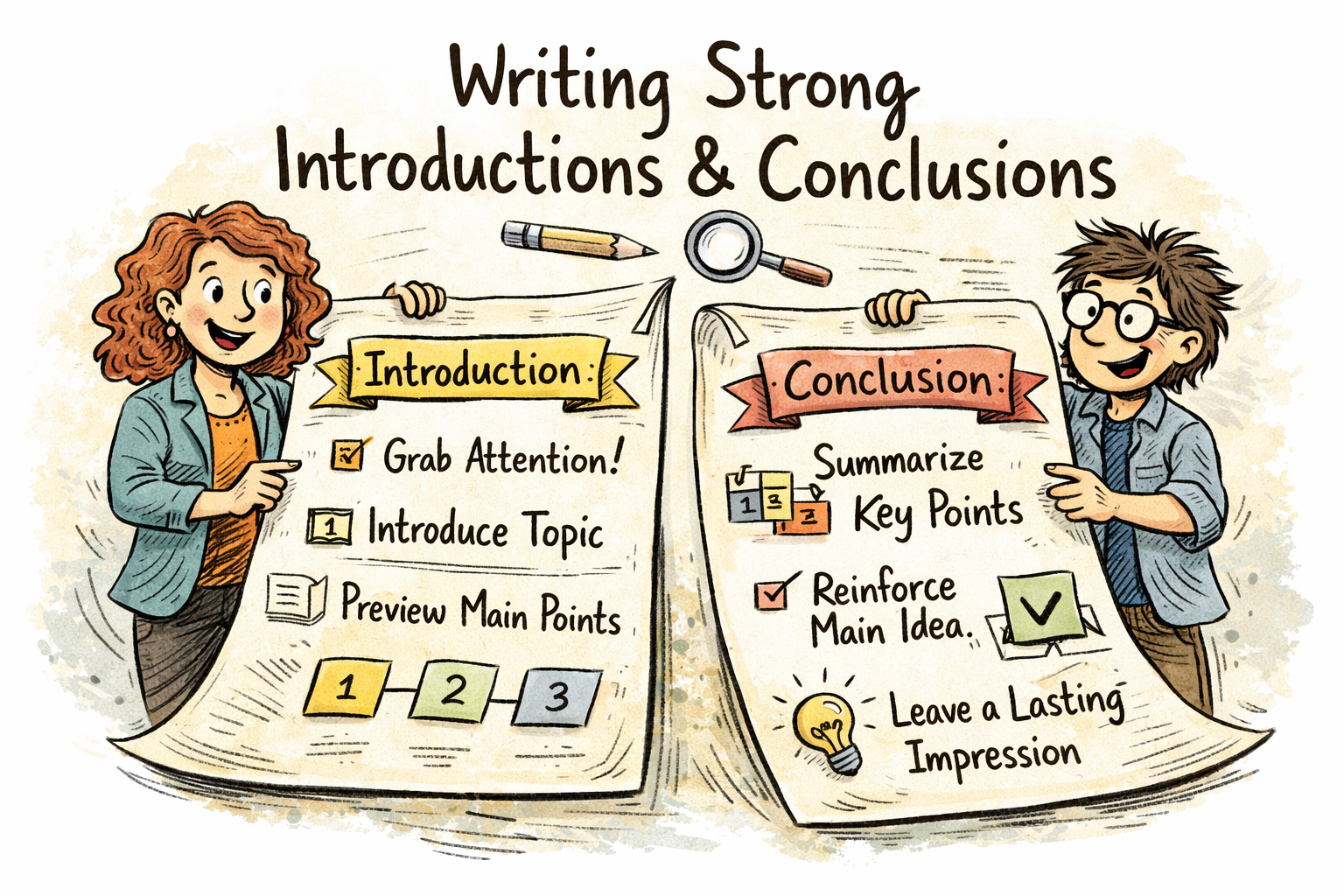
Introductions and conclusions play an essential role in effective writing. The introduction draws readers into the article, while the conclusion reinforces the main message and leaves a lasting impression. When both sections are written carefully, they help create a clear and meaningful reading experience.
The Purpose of an Introduction
An introduction helps readers understand what the article will discuss and why the topic matters. It provides context and prepares the reader for the information that follows.
A strong introduction often includes:
- a brief overview of the topic
- an explanation of why the subject is important
- a clear indication of what the reader will learn
Capturing Reader Interest
The first few sentences should encourage readers to continue. This can be done by presenting an interesting observation, highlighting a common challenge, or explaining the relevance of the topic.
An engaging opening helps readers feel that the article will provide useful or interesting insights.
Avoid Overly Long Introductions
While context is helpful, introductions should remain concise. Readers should quickly understand the topic without needing to work through unnecessary background information.
The Purpose of a Conclusion
A conclusion brings the article to a natural close. Rather than introducing new ideas, it reinforces the main message and helps readers reflect on what they have learned.
A strong conclusion might:
- summarise the main insight of the article
- emphasise the importance of the topic
- encourage further thought or exploration
Creating a Sense of Completion
Good conclusions give readers a clear sense that the discussion has reached a meaningful endpoint. This helps reinforce the value of the information presented throughout the article.
Final Thoughts
Introductions and conclusions frame the entire article. By guiding readers at the beginning and reinforcing the message at the end, writers can create content that feels complete, clear, and engaging.
← Back to Writing Library ← Back to Blog