Turning Research Into Clear Insights
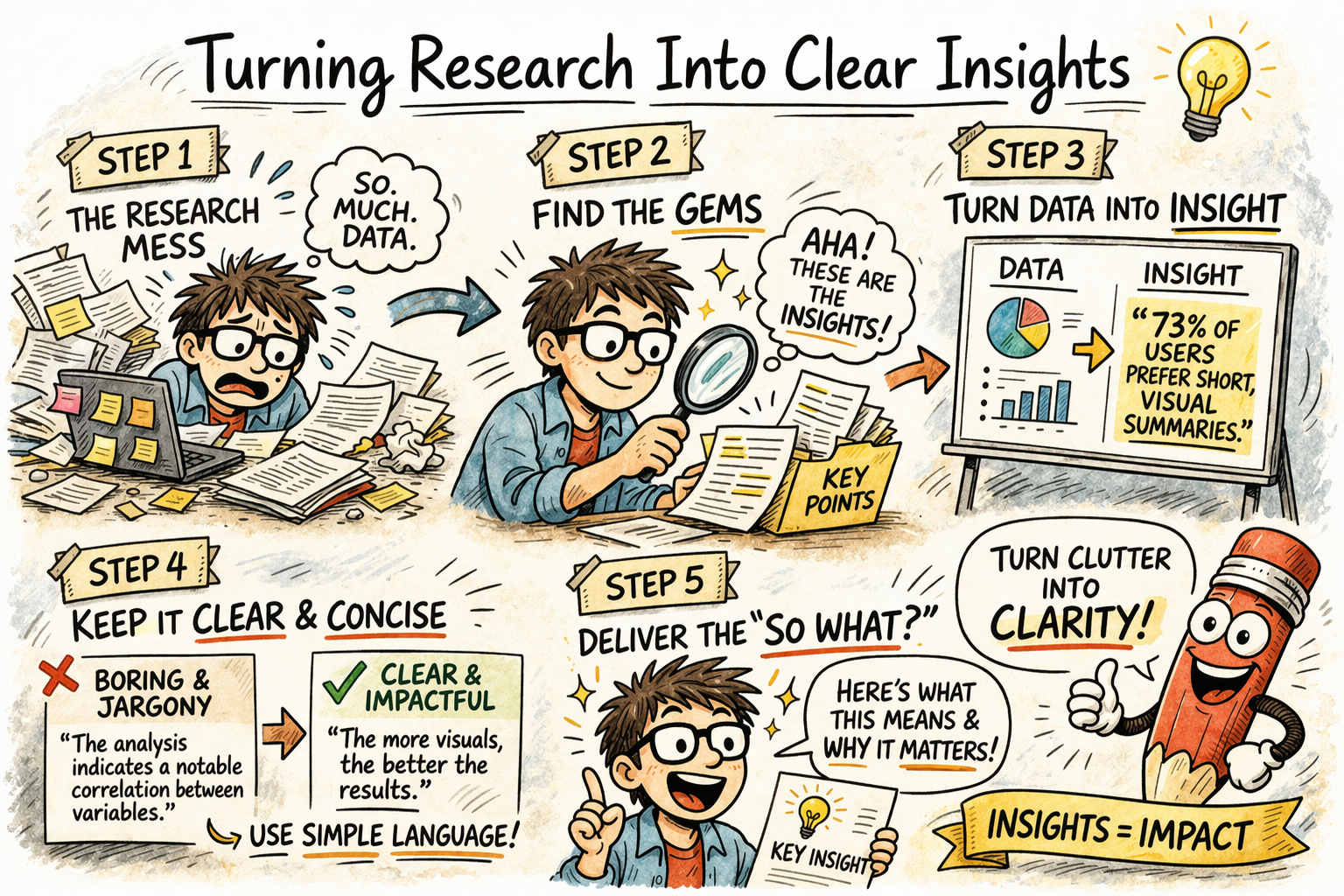
Research plays an important role in informing decisions, developing knowledge, and supporting professional work. However, collecting information is only the first step. The real value of research comes from turning information into insights that readers can understand and apply.
From Information to Understanding
Research often involves gathering data, reviewing sources, and analysing different perspectives. While this process can produce a large amount of information, not all of it is equally useful to readers.
The goal of research communication is to identify the most important findings and present them in a way that highlights their meaning and relevance.
Identify the Key Findings
After completing research, it is helpful to step back and identify the most important ideas that emerged from the process. These ideas often form the core insights of the final article or report.
Key questions to consider include:
- What patterns appeared in the research?
- What conclusions can reasonably be drawn?
- Which findings are most relevant to the reader?
Explain the Significance
Simply presenting research results is rarely enough. Readers also benefit from understanding why those findings matter.
Providing context and interpretation helps readers see the broader implications of the research.
Use Clear and Accessible Language
Research findings can sometimes be complex. Translating technical or detailed information into clear explanations helps make the insights accessible to a wider audience.
Writers should aim to present information accurately while avoiding unnecessary complexity.
Support Insights With Evidence
Strong insights are supported by credible evidence. Referencing relevant data, studies, or expert perspectives helps strengthen the reliability of the conclusions presented.
Final Thoughts
Turning research into meaningful insight requires thoughtful analysis and clear communication. By focusing on key findings and explaining their significance, writers can help readers understand not just the information itself but the value behind it.
← Back to Writing Library ← Back to Blog