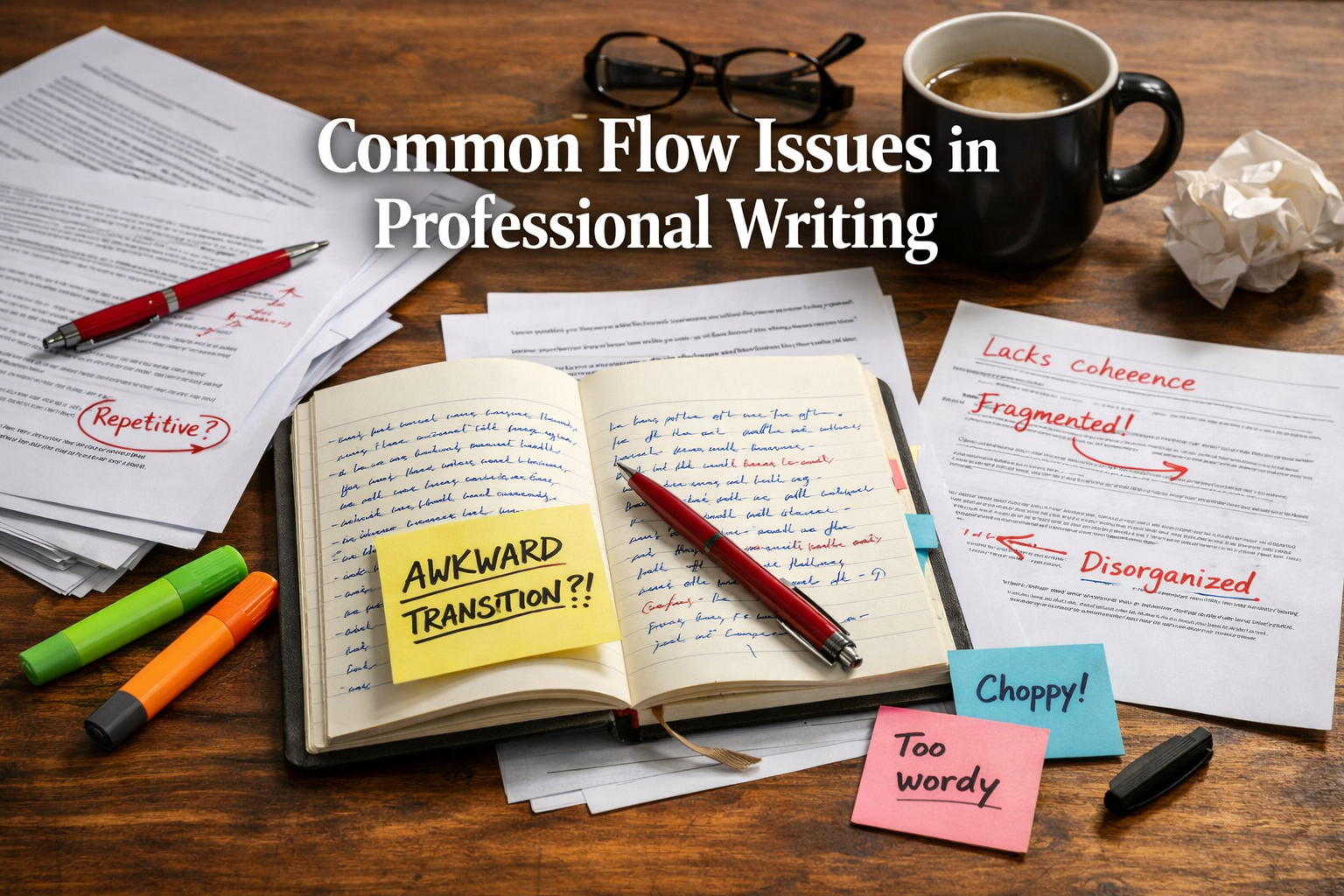
Flow is what makes writing feel smooth, logical, and easy to follow. In professional and academic contexts, poor flow can undermine even the strongest ideas.
When writing lacks cohesion, readers must work harder to understand the message — and often disengage before reaching the conclusion.
1. Abrupt Topic Shifts
One of the most common flow problems is jumping between ideas without clear transitions. This creates confusion and disrupts logical progression.
Ensure each new paragraph connects clearly to the previous one. Transitional phrases help guide readers through your argument.
2. Overly Long Sentences
Complex, multi-clause sentences can overwhelm readers. While variety is important, excessive length reduces clarity.
Break long sentences into shorter ones when possible, particularly if multiple ideas are being introduced at once.
3. Repetition Without Progression
Repeating the same idea in slightly different wording slows momentum. Each paragraph should add new insight, evidence, or explanation.
During editing, remove redundant phrases that do not strengthen your argument.
4. Weak Paragraph Structure
A paragraph should begin with a clear topic sentence, followed by supporting explanation or evidence.
Without this structure, writing can feel scattered or unfocused.
5. Inconsistent Tone
Sudden shifts from formal to informal language can disrupt professional flow. Maintain consistent tone appropriate to your audience and purpose.
Final Thoughts
Strong flow reflects thoughtful organisation and careful editing. By addressing structural weaknesses, you strengthen clarity, authority, and reader engagement.
Smooth writing is rarely accidental — it is the result of deliberate refinement.