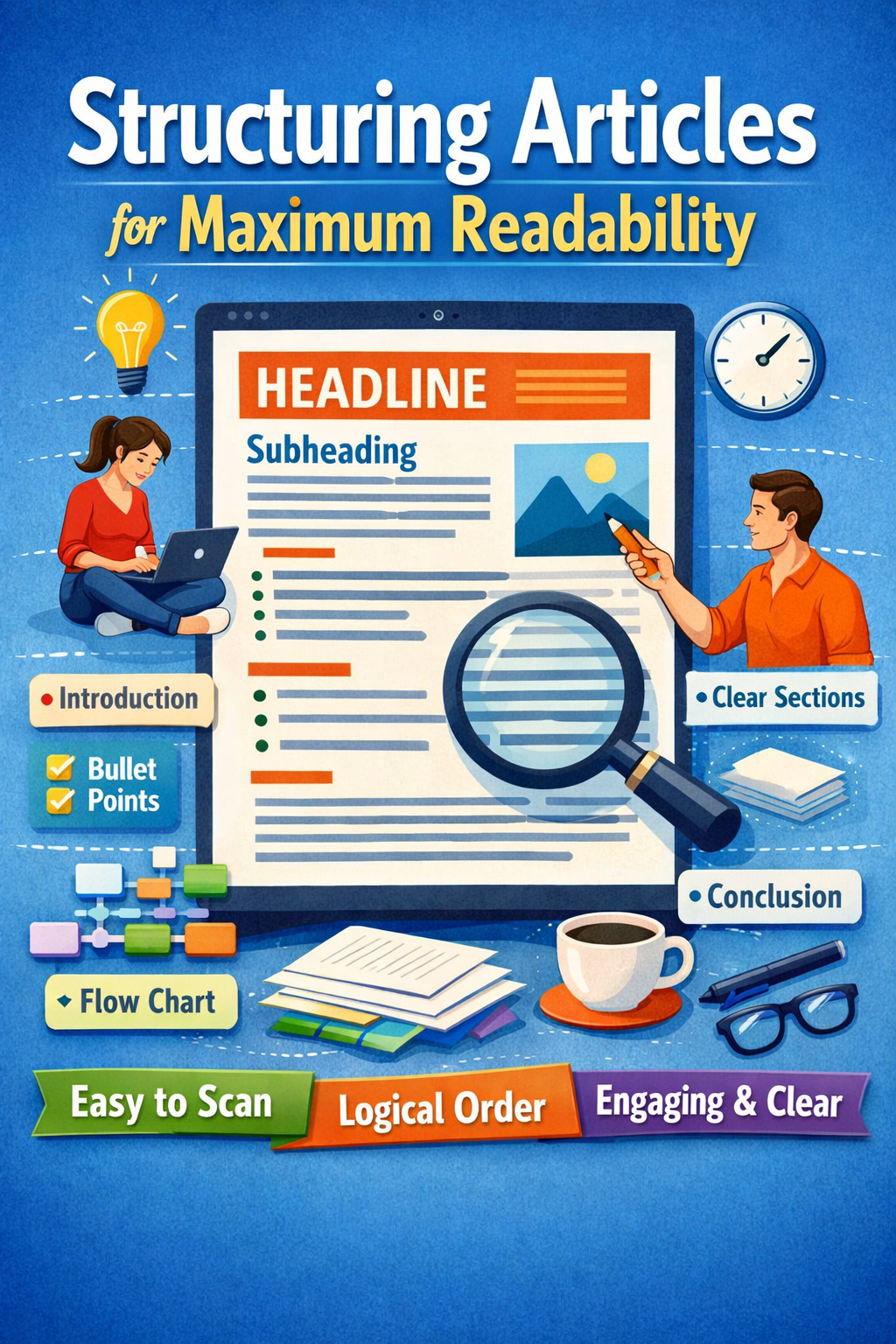
Even the strongest ideas can lose impact if they are poorly structured. Clear organisation helps readers move naturally from one idea to the next without confusion or fatigue.
Good structure is not about making writing rigid — it is about creating a logical pathway that supports understanding.
1. Start with a Clear Purpose
Before drafting or editing, define the main objective of the article. What should readers understand, feel, or do after reading?
A clear purpose guides structure and prevents unnecessary tangents.
2. Use Logical Headings
Headings act as signposts. They break content into manageable sections and help readers quickly scan for relevant information.
Each heading should clearly reflect the content beneath it and follow a logical progression.
3. Keep Paragraphs Focused
Each paragraph should develop one main idea. Overloaded paragraphs reduce clarity and discourage engagement.
Shorter paragraphs improve readability, particularly for digital audiences.
4. Strengthen Transitions
Smooth transitions connect ideas and maintain flow. Without them, writing can feel fragmented or abrupt.
Simple phrases such as “In addition,” “However,” or “As a result” can improve coherence significantly.
5. End with Impact
A strong conclusion reinforces key messages and provides closure. Avoid introducing entirely new ideas in the final section.
Final Thoughts
Structured writing demonstrates professionalism and respect for your audience’s time. When ideas are organised clearly, your authority and credibility increase.
Effective structure does not limit creativity — it enhances clarity and impact.