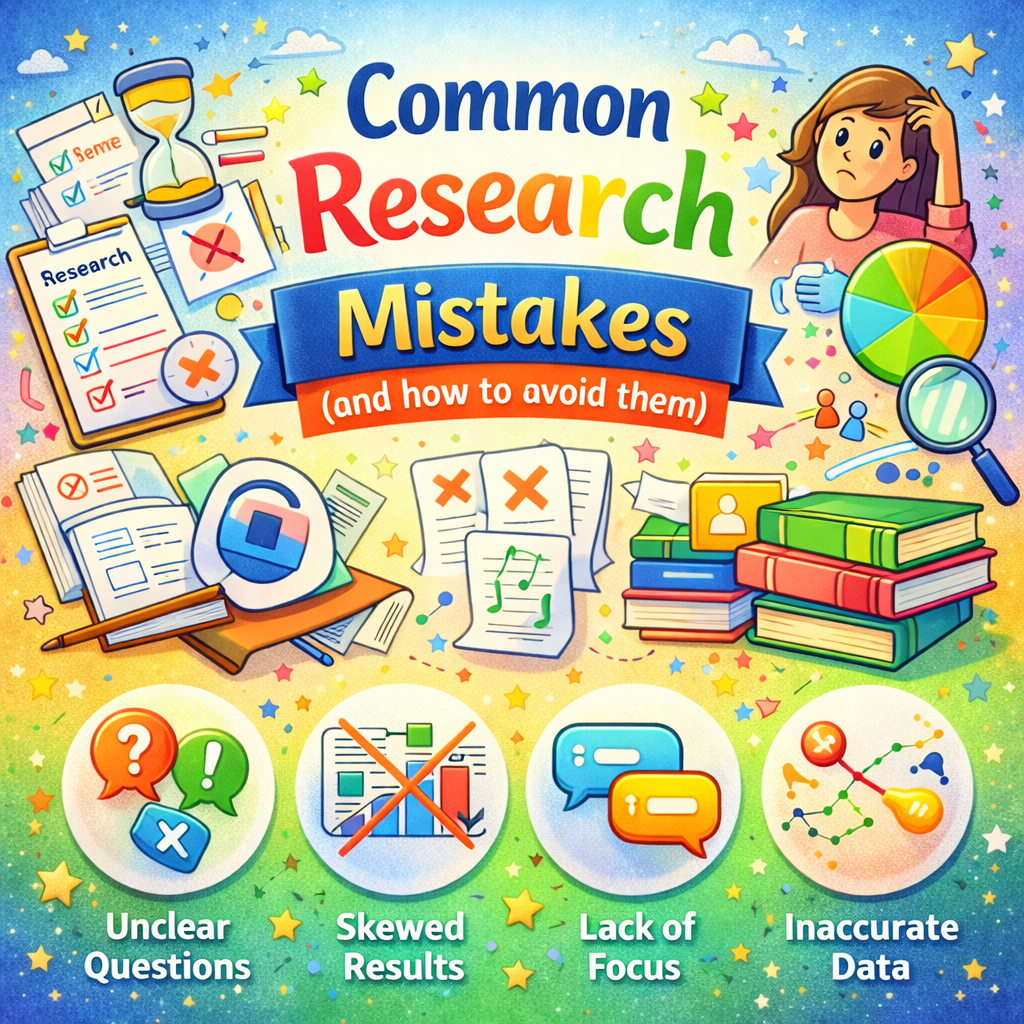
Common Research Mistakes (And How to Avoid Them)
Research is a powerful tool — but only when done thoughtfully. Even strong researchers can fall into common traps that weaken their findings. Recognising these mistakes early helps you produce clearer, more reliable, and more impactful work.
1. Starting Without a Clear Question
Diving into research without a defined objective often leads to scattered information and wasted time. A focused question keeps your work purposeful and organised.
- Define your primary question first
- Break it into smaller sub-questions
- Stay aligned with your original goal
2. Relying on a Single Source
Depending on one source limits perspective and increases the risk of bias. Strong research compares multiple viewpoints.
- Use a mix of academic, professional, and data-driven sources
- Cross-check key facts
- Look for supporting and opposing evidence
3. Ignoring Source Credibility
Not all information is reliable. Failing to evaluate authorship, publication date, and evidence quality can undermine your conclusions.
- Check author expertise
- Review publication dates
- Verify references and citations
4. Confirmation Bias
Confirmation bias happens when you search for information that supports your existing belief while ignoring conflicting evidence. This weakens objectivity.
- Actively seek alternative viewpoints
- Challenge your assumptions
- Be open to changing your perspective
5. Poor Note-Taking and Organisation
Disorganised notes make analysis difficult. Without structure, patterns are harder to identify and important details may be lost.
- Organise notes by theme
- Record sources clearly
- Highlight key insights as you go
6. Summarising Instead of Analysing
Simply repeating what sources say is not enough. Research becomes valuable when you interpret and explain what the findings mean.
- Ask “Why does this matter?”
- Connect findings to your objective
- Draw clear conclusions