Common Flow Issues in Professional Writing
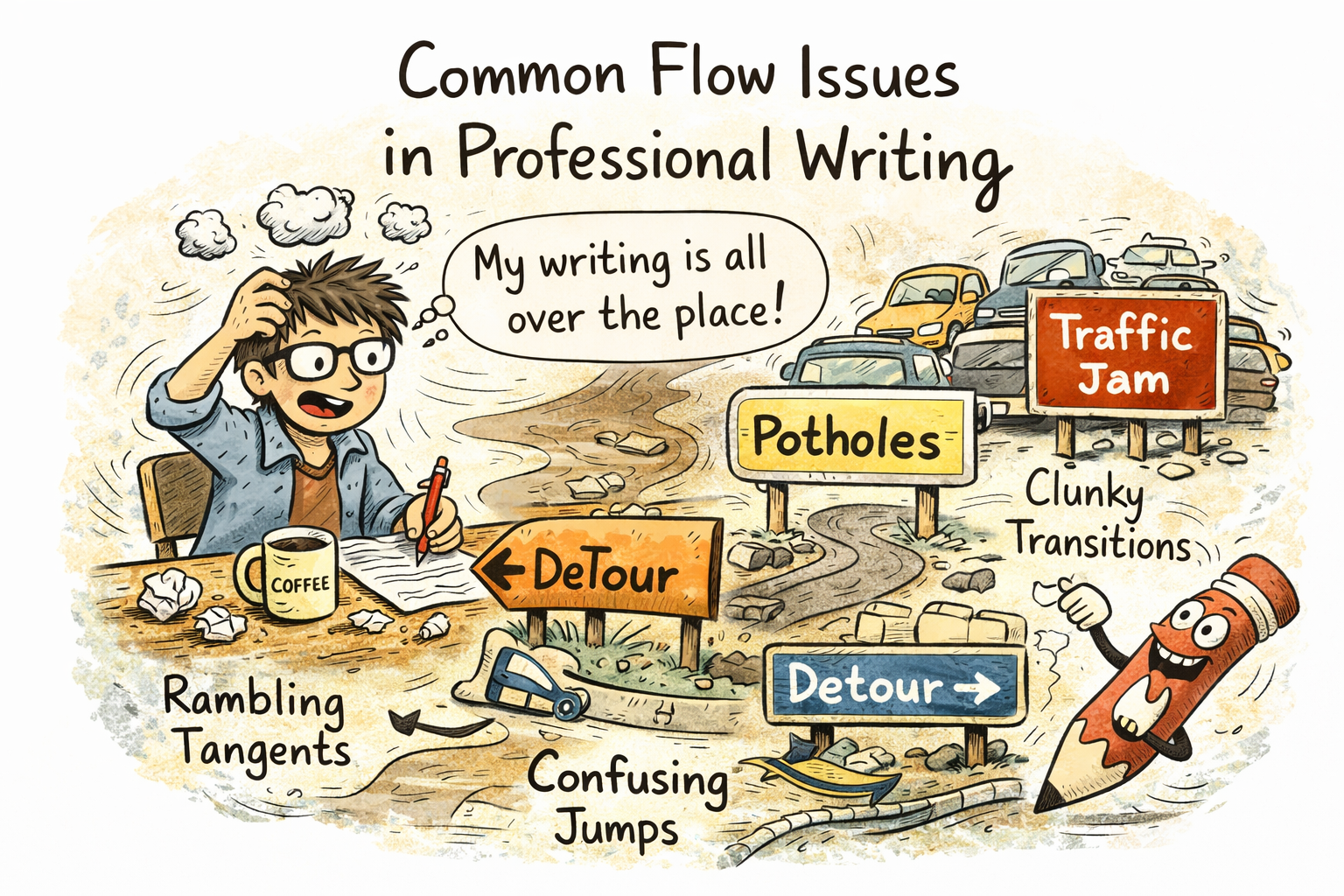
Flow refers to how smoothly ideas move from one sentence and paragraph to the next. When writing flows well, readers can follow the argument or explanation easily. When flow is disrupted, readers may feel confused or lose interest.
Jumping Between Ideas
One common issue occurs when writers move too quickly between topics. Without clear connections, readers may struggle to understand how ideas relate to each other.
Lack of Clear Transitions
Transitions help guide readers from one point to the next. Words and phrases such as “however,” “for example,” and “in addition” can help clarify relationships between ideas.
Overly Long Sentences
Long sentences can interrupt the rhythm of writing and make information harder to process. Breaking complex ideas into shorter sentences often improves clarity and flow.
Paragraphs Without Focus
Each paragraph should develop one main idea. When multiple ideas appear in the same paragraph, the structure becomes unclear and readers may lose track of the discussion.
Improving Flow Through Editing
Careful editing helps identify areas where writing feels awkward or disconnected. Reading text aloud can reveal sentences that interrupt the natural rhythm of the article.
Final Thoughts
Strong flow helps readers move comfortably through an article. By organising ideas carefully and using clear transitions, writers can create content that feels coherent and engaging.
← Back to Writing Library ← Back to Blog